Ucsc History of Arts and Visual Culture Emergency Action Plan
 | |
| Motto | Fiat lux (Latin) |
|---|---|
| Motto in English language | "Let in that location exist low-cal" |
| Blazon | Public country-grant research university |
| Established | 1965 (1965) [1] |
| Parent establishment | Academy of California |
| Accreditation | WSCUC |
| Academic affiliations |
|
| Endowment | $294 million (2021)[2] |
| Chancellor | Cynthia Larive |
| Provost | Lori Kletzer |
| Students | 19,161 (fall 2020)[three] |
| Undergraduates | 17,207 (fall 2020)[3] |
| Postgraduates | 1,954 (autumn 2020)[3] |
| Location | Santa Cruz California United States 37°00′Northward 122°04′W / 37.00°N 122.06°Westward / 37.00; -122.06 Coordinates: 37°00′N 122°04′West / 37.00°Due north 122.06°W / 37.00; -122.06 |
| Campus | Small City,[iv] 6,088 acres (ii,464 ha)[5] |
| Academic term | Quarter |
| Paper | Metropolis on a Hill Press |
| Colors | Blue Gold[half dozen] |
| Nickname | Banana Slugs |
| Sporting affiliations |
|
| Mascot | Sammy the Slug[seven] |
| Website | www |
 | |
The University of California, Santa Cruz (UC Santa Cruz or UCSC) is a public land-grant inquiry university in Santa Cruz, California. Information technology is one of the ten campuses in the Academy of California system. Located on Monterey Bay, on the border of the coastal community of Santa Cruz, the campus lies on 2,001 acres (810 ha) of rolling, forested hills overlooking the Pacific Ocean.
Founded in 1965, UC Santa Cruz began with the intention to showcase progressive, cross-disciplinary undergraduate education, innovative teaching methods and contemporary compages. The residential college system consists of ten small colleges that were established as a variation of the Oxbridge collegiate university system.[8]
UC Santa Cruz is classified amid "R1: Doctoral Universities – Very loftier research activity".[9] Information technology is a member of the Association of American Universities, the about prestigious alliance of research universities in the United States and Canada.
History [edit]
Prior to campus development [edit]
Prior to Spanish colonization, the Uypi tribe of the Awaswas Nation, who spoke Mutsun Costanoan of the Ohlone peoples, lived in what is at present the campus of UCSC. During Spanish colonization, members of the tribe were taken to Mission Santa Cruz as slaves.[10] During this fourth dimension, the missionaries of Mission Santa Cruz removed a part of the forest to build a vineyard on top of what is now the Great Meadow.
Later on the California Golden Rush, many mining firms came to the area. The Cowell Lime Works operated on the entirety of what is now the Santa Cruz campus until 1920.
Site pick and campus planning [edit]
Although some of the original founders had already outlined plans for an institution like UCSC as early every bit the 1930s, the opportunity to realize their vision did not present itself until the Urban center of Santa Cruz fabricated a bid to the UC Board of Regents in the mid-1950s to build a campus just exterior boondocks, in the foothills of the Santa Cruz Mountains.[eleven] During the mid-1950s, there was widespread public sentiment in favor of the institution of a new UC campus somewhere s of the original campus at Berkeley. In 1957, the California Country Senate passed a resolution asking the Regents to consider the Monterey Peninsula, and that same yr, the California State Associates passed its own resolution asking the Regents to consider the Santa Clara Valley.[12] In December 1959, the Regents voted to focus their site selection process on the Almaden Valley in San Jose (i.eastward., within the Santa Clara Valley and the larger region now known as Silicon Valley), just the public announcement of the Regents' decision immediately acquired holding values throughout that expanse to increase to the extent that the Regents could no longer afford to buy the necessary land.[12] Later on another year of report, the Regents finally selected Santa Cruz as the location of the next UC campus.[12]
However, Santa Cruz was selected for the dazzler, rather than the practicality, of its location, and its remoteness led to the decision to develop a residential college system that would business firm most of the students on-campus.[xiii] The formal design procedure for the Santa Cruz campus began in the late 1950s, culminating in the Long Range Development Program of 1963.[xiv]
Planning the new UC campus was simply as hard as picking the site. The first plan was to build the campus on what is now the Great Meadow, and so it would be close to the existing metropolis of Santa Cruz.[15] The second plan, conceived by Thomas Church, put the colleges into the redwood wood at the top of the hill above the Great Meadow.[15] This was clearly the meliorate idea, but presented the problem of how to place the colleges inside the forest.[15] The original design for College I (Cowell College) scattered its buildings amid the copse, which was sarcastically compared by i regent to "a series of motels on the shores of Lake Tahoe."[15] Having recently visited Aigues-Mortes, UC President Clark Kerr was inspired by the layout of that French medieval town to suggest concentrating each college's buildings into distinct clusters in the woods, and that is how UC Santa Cruz was actually built.[16]
Construction started by 1964, and the university was able to accommodate its starting time students (albeit living in trailers on what is now the East Field athletic surface area) in 1965. The campus was intended to be a showcase for contemporary architecture, progressive teaching methods, and undergraduate inquiry.[17] [18] [nineteen] According to founding chancellor Dean McHenry, the purpose of the distributed college system was to combine the benefits of a major research academy with the intimacy of a smaller higher.[20] [21] Kerr shared a passion with former Stanford roommate McHenry to build a academy modeled as "several Swarthmores" (i.e., small liberal arts colleges) in shut proximity to each other.[20] [22] Both men were well enlightened that Santa Cruz "was located in the shadow not but of Berkeley but also of Stanford, and was bound to remain in their shadows for a very long time to come and perhaps forever."[23] Therefore, they hoped to shape a "distinctive personality" for the Santa Cruz campus and permit it "flourish equally offset rate inside its own blazon."[23]
The "Santa Cruz dream" [edit]
In his memoirs, Kerr ruefully recounted the myriad errors made by himself and McHenry in launching the new campus.[23] They had created Santa Cruz as the "most experimental" of the UC campuses, but opened it just in fourth dimension for their cherished "Santa Cruz dream" to dice amongst the counterculture of the 1960s.[23] Santa Cruz apace became the "counterculture campus" where students and kinesthesia either "mellowed out" amid the redwood trees or turned into "activist-radical[due south]".[24] For example, when Kerr came to deliver an address at UC Santa Cruz's first commencement exercises in 1969, the ceremony was hijacked by students who denounced Kerr and McHenry for having "planned and created Santa Cruz as a capitalist-imperialist-fascist plot to divert the students from their revolution against the evils of American society and, in detail, against the horrors of the Vietnam War."[25] The students then tried to award an honorary degree to Huey P. Newton (who was in jail at the time, although he went on to earn his bachelor's and doctorate degrees at Santa Cruz).[25] Kerr later recalled this episode of "guerrilla theatre" every bit "one of the worst afternoons of my life."[26]
According to Kerr's account, during the 1970s, the quality of UC Santa Cruz's incoming freshman classes deteriorated as Me generation students increasingly chose to matriculate at less experimental UC campuses in society to major in subjects such as applied science and business concern administration (both absent-minded from Santa Cruz).[27] Another major factor behind the decrease in quality was a serial of "grisly murders" around Santa Cruz,[27] which at the fourth dimension was labeled the "murder upper-case letter of the globe".[28] The average SAT scores of UC Santa Cruz's incoming students dropped from 1250 in the early on 1970s to 1050 by the early 1980s.[27]
Sinsheimer Reforms [edit]
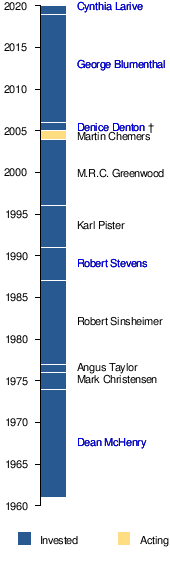
A series of major reforms were implemented by Chancellor Robert Sinsheimer (1977-1987) at the toll of making Santa Cruz less experimental and more conventional.[29] [30] [31] In 1981, afterwards a 2-year battle, the faculty narrowly voted to requite students the option of receiving grades for the showtime time, in lieu of Santa Cruz's traditional narrative evaluations.[30] By the autumn of 1984, 45% of Santa Cruz students were already majoring in the sciences, and that year, the campus offered computer engineering every bit a major for the first fourth dimension (in club to take reward of its proximity to Silicon Valley), followed by business concern economics a year later.[30] In May 1985, Sinsheimer, a molecular biologist, welcomed several scientists to Santa Cruz for one of the first meetings at which the idea of a Human Genome Project was discussed.[32]
Sinsheimer got Santa Cruz involved in intercollegiate athletics for the first time as function of NCAA Segmentation III. In 1981, he supported pupil athletes' preference for the ocean panthera leo as the campus mascot, only was forced to back down in 1986 when the student body voted to support the banana slug instead.[31]
By the early 1990s, the campus was however inefficient in that average education loads were notwithstanding lite compared to other UC campuses, but Sabbatum scores had stopped falling, the faculty was performing good research, and the campus was get-go to rise in academy rankings.[29] In 1997, an technology schoolhouse was finally launched.[29]
In 2019, the University of California, Santa Cruz was elected to the Association of American Universities (AAU), the well-nigh prestigious alliance of American research universities.[33] Forth with UCI, UC Santa Cruz was the youngest university to gain comprisal to the AAU.[34]
2020 strike action [edit]
On December 9, 2019, over 200 graduate educatee-workers initiated a wildcat strike past withholding Fall quarter grades with the following demands: (i) a COLA (cost of living adjustment) of $1,412/month to address the housing crisis in Santa Cruz, (2) a promise of non-retaliation confronting those participating in the strike, and (3) a cap on tuition for undergraduate students, to ensure that the increase in graduate student-worker pay would non increment the hire-burden and precarity of their students.[35] On February ten, 2020, graduate educatee-workers responded to disciplinary threats from UCSC administrators with a total teaching strike.[36] UCSC administrators' called in police from various counties to protect and serve. 17 students were arrested, and several were injured, but UCSC denied the claims of law brutality and excessive forcefulness.[37] On February 27, 2020, UC Davis and UC Santa Barbara joined the strike.[38] [39] On February 28, 2020, 54 graduate student-workers were terminated[40] and continued strikes shut downward the campus for at least ane day the following week.[41]


McHenry Library
Touch on on Santa Cruz [edit]
Although the metropolis of Santa Cruz already exhibited a potent conservation ethic before the founding of the university, the coincidental ascent of the counterculture of the 1960s together with the university's establishment fundamentally altered its subsequent development. Early on student and faculty activism at UCSC pioneered an approach to environmentalism that greatly impacted the industrial evolution of the surrounding expanse.[42] The lowering of the voting age to 18 in 1971 led to the emergence of a powerful student-voting bloc.[43] A large and growing population of politically liberal UCSC alumni changed the electorate of the town from predominantly Republican[44] to markedly left-leaning, consistently voting confronting expansion measures on the office of both town and gown.
| UCSC | Chancellors |
|---|---|
|
| |
Expansion plans [edit]
Plans for increasing enrollment to 19,500 students and calculation 1,500 kinesthesia and staff by 2020, and the predictable ecology impacts of such action, encountered opposition from the city, the local community, and the student trunk.[45] [46] City voters in 2006 passed ii measures calling on UCSC to pay for the impacts of campus growth. A Santa Cruz Superior Court guess invalidated the measures, ruling they were improperly put on the ballot. In 2008, the university, city, canton and neighborhood organizations reached an agreement to prepare aside numerous lawsuits and allow the expansion to occur. UCSC agreed to local government scrutiny of its north campus expansion plans, to provide housing for 67 percentage of the additional students on campus, and to pay municipal evolution and water fees.[47]
George Blumenthal, UCSC'south 10th Chancellor, intended to mitigate growth constraints in Santa Cruz by developing off-campus sites in Silicon Valley. The NASA Ames Research Center campus is planned to ultimately hold 2,000 UCSC students – about x% of the entire academy'due south future student body as envisioned for 2020.[48] [49]
In April 2010, UC Santa Cruz opened its new $35 meg Digital Arts Research Center; a projection in planning since 2004.[50]
The $72 million Coastal Biology Building officially opened on 21 October 2017 on the Littoral Science Campus.[51] The new campus houses the Ecology & Evolutionary Biology Department and faculty interested in the study of environmental and development in ocean, terrestrial and freshwater environments.
Campus [edit]
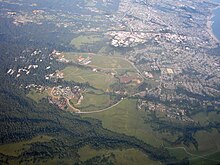
UCSC & Santa Cruz aerial view. The Smashing Meadow is the undeveloped area between city and academy
The 2,000-acre (810 ha) UCSC campus is located 75 miles (121 km) south of San Francisco, in the Ben Lomond Mount ridge of the Santa Cruz Mountains. Top varies from 285 feet (87 chiliad) at the campus entrance to i,195 feet (364 1000) at the northern boundary, a departure of about 900 feet (270 chiliad). The southern portion of the campus primarily consists of a big, open meadow, locally known equally the Corking Meadow. To the north of the meadow lie most of the campus' buildings, many of them among redwood groves. The campus is bounded on the south by the city's upper-west-side neighborhoods, on the due east by Harvey West Park[52] and the Pogonip open up space preserve,[53] on the northward by Henry Cowell Redwoods Land Park[54] almost the town of Felton, and on the west by Gray Whale Ranch, a portion of Wilder Ranch State Park.[55] The campus is built on a portion of the Cowell Family unit ranch, which was purchased by the University of California in 1961.[56] The northern half of the campus property has remained in its undeveloped, forested land apart from fire roads and hiking and bicycle trails. The heavily forested surface area has allowed UC Santa Cruz to operate a recreational vehicle park equally a grade of student housing.[57] In 2017 the University finished edifice the Coastal Science Facility for the Environmental and Evolutionary Biology Section. The facility, equipped with teaching classrooms, labs and greenhouses, is located on McAllister Way.[58]
A number of shrines, dens and other pupil-built curiosities are scattered effectually the northern campus. These structures, mostly assembled from branches and other wood detritus, were formerly full-bodied in the surface area known as Elfland, a glen the university razed in 1992 to build colleges Nine and Ten. Students were able to relocate and relieve some of the structures, however.[59] [60]
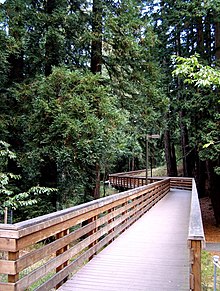
Creeks traverse the UCSC campus inside several ravines. Footbridges span those ravines on pedestrian paths linking diverse areas of campus. The footbridges make it possible to walk to any office of campus inside twenty minutes in spite of the campus existence built on a mountainside with varying elevations.[61] At night, orange lights illuminate the occasionally fogged-in paths.[62]
There are a number of natural points of interest throughout the UCSC grounds. The "Porter Caves" are a popular site among students on the west side of campus. The archway is located in the woods betwixt the Porter Higher meadow and Empire Form Road. The caves air current through a set of caverns, some of which are challenging, narrow passages. Tree 9 is another popular destination for students. A big Douglas fir spanning approximately 103 feet (31 grand) tall, Tree Ix is located in the upper campus of UCSC backside College 9. The tree had been a pop climbing spot for many years but due to environmental corrosion and fear of student injuries, UC basis services sawed off the limbs to make it about impossible to climb.[63] Less experienced tree-climbers also frequent Sunset Tree located on the due east side of the meadow behind the UCSC Music Centre.[64] [65]
The UCSC campus is as well i of the few homes to Mima Mounds in the United States. They are rare in the Us and in the world in general.

Panorama of Neat Meadow.
Academics [edit]
The university has five bookish divisions: Arts, Engineering, Humanities, Concrete & Biological Sciences, and Social Sciences. Together, they offer 65 graduate programs, 64 undergraduate majors, and 41 minors.[66]
Popular undergraduate majors include Art, Business Direction Economics, Chemistry, Molecular and Cell Biology, Physics, and Psychology.[67] Interdisciplinary programs, such as Computational Media, Feminist Studies, Environmental Studies, Visual Studies, Digital Arts and New Media, Critical Race & Indigenous Studies, and the History of Consciousness Department are too hosted aslope UCSC's more traditional academic departments.
A joint programme with UC Hastings enables UC Santa Cruz students to earn a available'southward caste and Juris Doctor degree in half-dozen years instead of the usual seven. The "three+3 BA/JD" Program between UC Santa Cruz and UC Hastings College of the Police in San Francisco accepted its first applicants in fall 2014.[68] UCSC students who declare their intent in their freshman or early sophomore year volition complete three years at UCSC so motility on to UC Hastings to begin the three-yr law curriculum. Credits from the commencement year of law school will count toward a student'due south bachelor'due south degree. Students who successfully consummate the beginning-year police force course work volition receive their bachelor's caste and be able to graduate with their UCSC class, then go along at UC Hastings afterwards for 2 years.
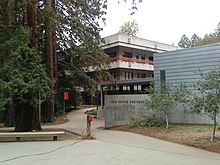
Approaching Baskin Engineering from McLaughlin Drive
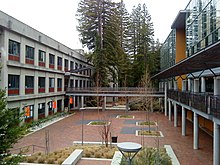
Research [edit]
According to the National Scientific discipline Foundation, UC Santa Cruz spent $127.5 million on enquiry and development in 2018, ranking it 144th in the nation.[69]
Although designed equally a liberal arts-oriented university, UCSC rapidly acquired a graduate-level natural science research component with the appointment of plant physiologist Kenneth V. Thimann equally the showtime provost of Crown College. Thimann developed UCSC'southward early Division of Natural Sciences and recruited other well-known science faculty and graduate students to the fledgling campus.[70] Immediately upon its founding, UCSC was too granted authoritative responsibleness for the Lick Observatory, which established the campus as a major center for astronomy enquiry.[71] Founding members of the Social Science and Humanities faculty created the unique History of Consciousness graduate program in UCSC'due south first year of operation.[72]
Famous onetime UCSC faculty members include Judith Butler and Angela Davis.
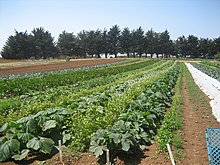
UCSC's organic farm and garden program is the oldest in the country, and pioneered organic horticulture techniques internationally.[73] [74]
As of 2015, UCSC's faculty include 13 members of the National Academy of Sciences, 24 fellows of the American Academy of Arts and Sciences, and 33 fellows of the American Clan for the Advocacy of Science.[1] The Baskin School of Technology, founded in 1997, is UCSC's first and only professional person school[ citation needed ]. Baskin Applied science is home to several research centers, including the Eye for Biomolecular Scientific discipline and Technology[75] and Cyberphysical Systems Research Center, which are gaining recognition, as has the work that UCSC researchers David Haussler and Jim Kent have washed on the Human Genome Project,[76] [77] including the widely used UCSC Genome Browser.[78] UCSC administers the National Scientific discipline Foundation's Center for Adaptive Optics.[79]
Off-campus research facilities maintained by UCSC include the Lick and Keck Observatories and the Long Marine Laboratory. From September 2003 to July 2016, UCSC managed a University Affiliated Research Arrangement (UARC) for the NASA Ames Research Heart under a chore order contract valued at more than $330 million.[80]
Rankings [edit]
|
|
| ||||||||||||||||||||||||||||||||||||||||||||||||||||||||||||||||||||||||||||||||||||||||
UC Santa Cruz was tied for 58th in the list of Best Global Universities and tied for 97th in the list of All-time National Universities in the United States by U.S. News & World Written report 'southward 2021 rankings.[92] In 2017 Kiplinger ranked UC Santa Cruz 50th out of the top 100 best-value public colleges and universities in the nation, and 3rd in California.[93] Money Magazine ranked UC Santa Cruz 41st in the country out of the well-nigh 1500 schools it evaluated for its 2016 All-time Colleges ranking.[94] In 2016–2017, UC Santa Cruz was rated 146th in the earth past Times Higher Educational activity Earth University Rankings. In 2016 it was ranked 83rd in the world past the Academic Ranking of World Universities and 296th worldwide in 2016 by the QS World Academy Rankings.
In 2009, RePEc, an online database of research economic science articles, ranked the UCSC Economics Department 6th in the world in the field of international finance.[95] In 2007, High Times mag placed UCSC as first among United states universities equally a "counterculture higher."[96] In 2009, The Princeton Review (with Gamepro magazine) ranked UC Santa Cruz'southward Game Design major among the top 50 in the country.[97] In 2011, The Princeton Review and Gamepro Media ranked UC Santa Cruz's graduate programs in Game Blueprint as seventh in the nation.[98] In 2012, UCSC was ranked No. 3 in the Most Beautiful Campus list of Princeton Review.[99]
Residential colleges [edit]
The undergraduate program, with only the fractional exception of those majors run through the academy's Baskin School of Engineering, is all the same based on the version of the "residential college organisation" outlined past Clark Kerr and Dean McHenry at the inception of their original plans for the campus (see History, higher up). Upon admission, all undergraduate students have the opportunity to cull one of ten colleges, with which they unremarkably stay affiliated for their entire undergraduate careers.[100] There are cases where some students switch college affiliations as each college holds a dissimilar graduation anniversary. Well-nigh all faculty members are affiliated with a higher too.[100] The private colleges provide housing and dining services, while the university equally a whole offers courses and majors to the general pupil community.[100] Other universities with similar college systems include Rice University and the University of California, San Diego.
Each of the colleges has its own, distinctive architectural way and a resident faculty provost, who is the nominal head of his or her college.[100] An incoming first-year educatee will accept a mandatory "core course" inside his or her respective college, with a curriculum and central theme unique to that college.[100] College resident populations vary from virtually 750 to one,550 students, with roughly half of undergraduates living on campus inside their college community or in smaller, intramural campus communities such every bit the International Living Center, the Trailer Park, and the Village.[100] Coursework, academic majors and general areas of study are not limited by higher membership, although colleges host the offices of many academic departments. Graduate students are not affiliated with a residential college, though a large portion of their offices, besides, have historically tended to exist based in the colleges. The ten colleges are, in order of establishment:
- The 10 Residential Colleges
Admissions [edit]
| 2019[101] | 2018[102] | 2017[103] | 2016[104] | 2015[105] | |
|---|---|---|---|---|---|
| Applicants | 55,866 | 56,634 | 52,975 | 49,185 | 44,871 |
| Admitted | 28,808 | 27,014 | 27,235 | 28,884 | 23,022 |
| Acknowledge rate | 51.half dozen% | 47.7% | 51.4% | 58.vii% | 51.3% |
| Enrolled | 3,722 | 3,701 | four,045 | four,221 | 3,570 |
| Saturday (Math+Reading)* 25th-75th percentile | 1200-1360 | 1170–1400 | 1160–1370 | 1060–1300 | 1070–1310 |
| ACT range 25th-75th percentile | 24-30 | 24–31 | 24-30 | 23–29 | 23–29 |
| * Sabbatum out of 1600 |
For the fall 2019 term, UCSC offered admission to 28,808 freshmen out of 55,866 applicants, an acceptance charge per unit of 51.6%. The inbound freshman form had an average high school GPA of 3.57, and the heart l% range of Saturday scores were 590-680 for testify-base reading and writing, 600-710 for math, while the Act Composite range was 24–30.[101]
Grading [edit]
For most of its history, UCSC employed a unique student evaluation system. With the exception of the choice of letter grades in science courses the but grades assigned were "pass" and "no record", supplemented with narrative evaluations. Beginning in 1997, UCSC allowed students the option of selecting letter of the alphabet course evaluations, but course grades were still optional until 2000, when faculty voted to require students receive alphabetic character grades. Students were still given narrative evaluations to complement the letter of the alphabet grades. As of 2010[update], the narrative evaluations were deemed an unnecessary expenditure. Still, some professors write evaluations for all students while some would write evaluations for specific students upon request.[106] Students tin nevertheless elect to receive a "pass/no pass" grade, but many academic programs limit or even forbid pass/no laissez passer grading. A grade of C and above would receive a form of "laissez passer". Overall, students may at present earn no more than 25% of their UCSC credits on a "pass/no pass" basis. Although the default grading option for well-nigh all courses offered is at present "graded", most class grades are still accompanied by written evaluations.[107]
Library [edit]
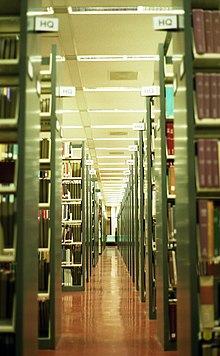
The McHenry Library houses UCSC's arts and letters drove, with most of the scientific reading at the newer Science and Applied science Library. The McHenry Library was designed by John Carl Warnecke.[71] In add-on, the colleges host smaller libraries, which serve as quiet places to study. The McHenry Special Collections Library includes the athenaeum of Robert A. Heinlein, the papers of Anaïs Nin, the papers and drawings of Beat poet Kenneth Patchen, the largest collection of Edward Weston photographs in the United States, the mycology book collection of composer John Cage, a large collection of works past Satyajit Ray, the Hayden White collection of 16th-century Italian press, a photography collection with about half a one thousand thousand items, and the Mary Lea Shane Archives. The Shane Athenaeum contains an extensive collection of photographs, letters, and other documents related to Lick Observatory dating dorsum to 1870.[108]
A 82,000-foursquare-foot (7,600 yard2) new improver to the library opened on March 31, 2008, including a "cyber study" room and a Global Hamlet café. The original 144,000-foursquare-foot (13,400 mii) library reopened on June 22, 2011 later on seismic upgrades and other renovations.[109] [110] In full, the University Libraries incorporate over 2.iv one thousand thousand volumes.
Grateful Dead archive [edit]
In 2008, UCSC agreed to house the Grateful Dead archives at the McHenry Library.[111] [112] Exhibits of Grateful Dead Annal materials are on brandish in the Brittingham Family unit Foundation's Dead Central Gallery on the 2nd Floor of McHenry Library. The Dead Central exhibit space is open during all library business hours. UCSC plans to devote an entire room at the library, to exist called "Expressionless Central," to display the drove and encourage enquiry.[113] UCSC shell out petitions from Stanford and UC Berkeley to firm the archives. Grateful Dead guitarist Bob Weir said that UCSC is "a seat of neo-Bohemian culture that we're a facet of. There could non have been a cozier place for this collection to land."[114] The archive became open up to the public July 29, 2012.
Pupil life [edit]
About undergraduates are from California. The following tables show the ethnic and regional breakdown of the pupil body:
| Regional Origin of 2015 Freshmen [115] | Percent |
| Monterey Bay surface area and Santa Clara Valley | xi.8% |
| San Francisco Bay Area | 26.2% |
| Northern California | one.v% |
| East Cardinal California | 11.2% |
| Los Angeles-South Declension | 25.0% |
| San Diego and desert areas | 12.ane% |
| Other U.S. states | 4.8% |
| Foreign | seven.2% |
| Unknown | 0.1% |
| Ethnicity, Fall [116] | 2020 Undergraduate | 2016 Undergraduate | 2020 Graduate | 2016 Graduate |
|---|---|---|---|---|
| White | xxx.2% | 32.0% | 39.8% | 43.3% |
| Hispanic and Latino Americans | 26.1% | 29.i% | 12.ii% | 10.4% |
| Asian Americans | 29.2% | 27.6% | 12.4% | 9.seven% |
| African Americans | 4.6% | 4.1% | 3.7% | 2.6% |
| International | seven.vi% | 4.5% | 27.three% | 27.1% |
| Native American | 0.vii% | 0.9% | 0.7% | ane.4% |
| Unknown | ane.6% | i.eight% | three.9% | 5.seven% |
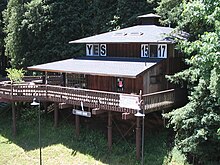
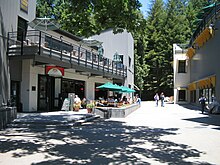
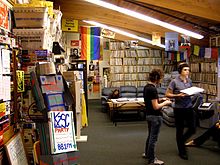
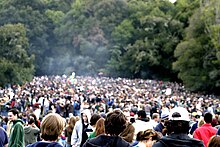
Students and others gather for a "420 Day" event in Porter Meadow at the University of California, Santa Cruz, campus on Apr 20, 2007.
UCSC students are known for political activism. In 2005, a Pentagon surveillance program accounted student opposition to armed services recruiters on campus a "apparent threat," the only campus antiwar action to receive the designation.[117] In February 2006, Chancellor Denice Denton got the designation removed.[118] Military recruiters declined to return to UCSC the post-obit year, but returned in 2008 to a more depression-keyed student reception and protests using elements of guerrilla theatre, rather than vandalism or concrete violence.[119] [120] Thank you to students passing a $iii quarterly tuition increase to support buying renewable energy in 2006, UCSC is the 6th-largest buyer of renewable energy among college campuses nationwide.[121]
UC Santa Cruz is also well known for its cannabis civilization. On April 20, 2007, approximately 2,000 UCSC students gathered at Porter Meadow to celebrate the annual "420". Students and others openly smoked marijuana while campus police stood by.[122] The once student-but event has grown since the city of Santa Cruz passed Measure M in 2006, an ordinance making marijuana utilise a depression-priority criminal offense for police force. The 2007 event attracted a total of 5,000 participants. The university does not condone the gathering, but has taken steps to regulate the upshot and ensure security for all participants. On April 20, 2010, the school assistants shut downwardly the west entrance to campus and limited the number of buses that could drive through campus.[123] [124]
Another well known tradition is what is known as "First Rain". Students run effectually campus naked or nearly naked to celebrate the school year's start dark of heavy rain. The run begins at Porter and gain to travel through all the other colleges, collecting more than students in its train.[125]
Student regime [edit]
The Student Marriage Associates was founded in 1985 to better coordinate bargaining positions between students and administration on campus-wide issues.[126] All the residential colleges and half-dozen ethnic and gender-based organizations send delegates to SUA.[127] There is a total of 138 recognized educatee groups as of 2008[update].[128]
Educatee media [edit]
All Educatee media organizations are funded past a student quango referendum of $iii.20 per student per quarter.[129]
- City on a Colina Press, a weekly publication that serves equally the traditional campus paper.
- Fish Rap Live!, the alternative, comedic paper.
- TWANAS, the Third World and Native American Student Press Commonage publishes issues about every quarter for various communities of color at UCSC. Its tiptop years were during the 1970s, 1980s and 1990s.
- Student Cablevision Television (SCTV) disbanded at the kickoff of the 2010 bookish school year. On The Spot (OTS), replaced the defunct SCTV organization, continuing the pupil-run television set opportunities. On The Spot airs on channel 28 just on campus.[130]
- The Moxie Product Grouping, which produces content on a quarterly basis.
- The Projection, a quarterly paper, for UCSC's radical community.
- The Disorientation Guide, published on desultory years, introduces new students to UCSC'southward radical history and various political problems that confront the campus and community.[131]
- Rapt Magazine, a quarterly literary and arts magazine.
- Leviathan Jewish Journal, a Jewish student life publication.[132]
- On The Spot, a pupil-run broadcast media organization, that produces a variety of shows including Printing Center Live (Sketch-Comedy), Art (Music videos), and game shows.
- Assistant Slug News, a television broadcast news plan.
- Chinquapin, an open-ended creative journal sponsored by the artistic writing department.[133]
- Turnstile, a poetry journal.
- "Gaia Magazine," a magazine virtually environmental and sustainability subjects that is published in one case a twelvemonth.
- Red Wheelbarrow, a "literary arts" journal.[134]
- Matchbox Mag, an annual humanities publication, started at UCSC, that operates beyond many UC campuses.[135]
- EyeCandy, an almanac pupil-run picture journal associated with the Motion-picture show and Digital Media department.[136]
- KZSC, the educatee-run campus radio station.[137]
- Santa Cruz Indymedia, a local activist resource with a lot of UCSC content.
- The Film Production Coalition which produces films on a quarterly footing.[138]
Housing [edit]
About of the UCSC undergraduate housing is affiliated with one of the ten residential colleges. The residence halls, which include both shared and individual rooms, typically house 15 to twenty students per floor and have common bathrooms and lounge areas. Some halls have coed floors where men and women share bathroom facilities, others have split bathroom facilities for men and women. Single-gender, gender-neutral and substance-free floors are also bachelor.
All of the colleges, except for Kresge, take both residence halls and apartments. Kresge is all apartments. Apartments are typically shared by four to eight students, have common living/dining rooms, kitchens and bathrooms, and a combination of shared and private bedrooms. Apartments at colleges other than Kresge are more often than not reserved for students above the freshman level.
In addition to the residential colleges, housing is available at the Hamlet on the lower quarry, populated by standing and transfer students (in 2016-17, this will be restricted to merely continuing students); the Redwood Grove Apartments, which is available to continuing educatee applicants from all colleges; and the University Town Middle, located downtown, that serves both continuing and transfer students. The Transfer Community is located in sections of both the A and B Buildings at Porter College and over 500 residents live within this theme housing. Graduate Student Housing is bachelor nearly Science Hill, and UCSC also offers Family unit Student Housing units too as a Camper Park for educatee-owned trailers and RVs.[139]
Greek life [edit]
UCSC is home to few fraternities and sororities. The first Greek organization on campus, Theta Chi, was given colony condition on January 10, 1987 and chartered on Oct 14, 1989 (designation: Theta Iota). In the start, fraternities like Theta Chi and Sigma Alpha Epsilon were met with strong opposition from the student body. Student groups like P.A.C. (People's Alternative Community), S.A.G.East. (Students Against Greek Environments), and M.A.C. (Men's Culling Community) protested the existence of Greek life at the UCSC campus.[ citation needed ] Theta Chi is now on the list of banned Greek-letter organizations.[140]
Greek life at UCSC includes fraternities Sigma Lambda Beta, Tau Kappa Epsilon, Sigma Pi, Lambda Phi Epsilon, Sigma Phi Zeta, Alpha Epsilon Pi, Pi Alpha Phi, and Delta Lambda Psi, the nation'south showtime gender neutral queer Greek organization. Sororities that are members of the National Panhellenic Council at the University of California, Santa Cruz include Gamma Phi Beta and Kappa Kappa Gamma. Recently in June 2016 the Theta Xi chapter of Kappa Alpha Theta was chartered to bring a tertiary National sorority to UC Santa Cruz.[141] Sororities on campus include Delta Sigma Theta, Sigma Lambda Gamma, Sigma Blastoff Epsilon Pi, alpha Kappa Delta Phi, Gamma Phi Beta, Kappa Kappa Gamma, Sigma Pi Alpha, Tri Chi, Sigma Omicron Pi, Kappa Zeta, Lambda Theta Blastoff and Alpha Psi.[142] The most recent Greek lettered organization added to the campus was Zeta Phi Beta sorority, which chartered its affiliate Gamma Phi as of Spring 2016.
Aside from social fraternities and sororities on campus, in that location are likewise a number of professional person organizations as well. In that location are Kappa Gamma Delta,[143] a prehealth sorority, Sigma Mu Delta, a prehealth fraternity, Alpha Phi Omega, a coed service fraternity, Phi Alpha Delta, a pre-law fraternity, and Delta Sigma Pi, a co-ed professional business fraternity.[144]
Sustainability [edit]
Students established the Student Environmental Center (SEC) in 2001, have held annual Earth Summits, and established a sustainability funding body, the Campus Sustainability Council. In 2004, the UC Policy on Sustainable Practices was released, stating that the University of California Function of the President was committed to minimizing its touch on the surroundings and reducing its dependence on non-renewable energy. In 2006, a Committee on Sustainability and Stewardship (CSS) was established and a campus-wide Sustainability Assessment was completed. The post-obit year, the airplane pilot Sustainability Office was created to help institutionalize sustainability, coordinate communication and collaboration between the many entities already engaged in campus sustainability activities at UCSC, support policy implementation, and serve as a resources for the campus.[145]
Organizations [edit]
The following is a list of UCSC sustainability organizations, departments, gardens, and funding bodies on the UCSC campus:
- Brotherhood to Save Free energy's Ability Save Dark-green Campus Program (formerly known as Green Campus Programme)
- Arboretum
- California Student Sustainability Coalition (CSSC)
- Campus Sustainability Council (CSC)
- Campus Sustainability Office
- Carbon Fund
- Center for Agroecology & Sustainable Food Systems
- Center for Global, International and Regional Studies
- Higher Eight: Nurturing Green Entrepreneurs
- Customs Agroecology Network (CAN)
- Pedagogy for Sustainable Living Programme (ESLP)
- Environmental Studies Section
- Friends of the Community Agricultural ecology Network (FoCAN)
- Friends of the Sustainability Function (FoSO)
- IDEASS
- Kresge Garden
- Kresge Natural Nutrient Cooperative
- Meatless Mondays, Beefless Thursdays & Farm Fridays in the dining halls
- Path to a Greener Stevenson (PTAGS)
- Plan in Customs and Agroecology (PICA)
- Program Recognizing Offices Practicing Sustainability (PROPS), a light-green office certification programme
- Slugbotics
- Site Stewardship Plan
- Pupil Ecology Center (SEC)
- Student Ecology Center (SEC)
- Student Sustainability Advisers (SSA)
- Sustainability Lab
- UCSC Climate Change Research Resources
- UCSC Greenhouses
- UCSC Museum of Natural History Collections
- UCSC Natural Reserves
- UCSC Sustainability Engineering and Ecological Pattern
Athletics [edit]
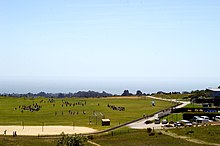
UCSC competes in Division 3 of the NCAA, mainly as a member of the Coast to Coast Athletic Conference (C2C). There are fifteen varsity sports – men'due south and women's basketball, tennis, soccer, volleyball, swimming, cross country and diving, and women's golf. UCSC teams take been Sectionalisation 3 nationally ranked in lawn tennis, soccer, men's volleyball, and swimming. The Men'southward water polo team was ranked 18th in the nation in 2006 and won the D3 national Championship, however in 2009 the team was cutting due to budget cuts. UCSC maintains a number of lodge teams. Information technology has won several club national championships in men'due south tennis, 3 in men'south waterpolo and also a women'southward Division 2 championship in club rugby.
Due to mounting debt resulting from UCSC's athletic program, UCSC polled its students in 2016 on whether they would consider blessing a quarterly fee that would support able-bodied operations. Subsequently polling showed support for a potential fee, a measure to introduce a quarterly fee passed in 2017 with 79% of voting students in favor.[146]
Notable alumni and faculty [edit]
Notable alumni of the University of California, Santa Cruz include co-founder of the Black Panther Party Huey P. Newton (BA 1974, PhD 1980); extra and comedian Maya Rudolph (BA 1995); founder of Huffington Postal service and BuzzFeed Jonah Peretti (BA 1996); filmmaker Cary Fukunaga (BA 1999); marine biologist and MacArthur Fellowship winner Stacy Jupiter (PhD 2006); acclaimed author and cultural theorist bell hooks (PhD 1983); acclaimed writer Geoffrey Dunn[147] [148] and several Pulitzer Prize-winning journalists. Notable attendees include actor and comedian Andy Samberg and filmmaker Miranda July.
- Notable UC Santa Cruz alumni include:
-

-

-

-
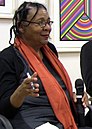
bell hooks, critically acclaimed author and cultural theorist
See also [edit]
- Shakespeare Santa Cruz
- Academy of California, Santa Cruz, Arboretum
References [edit]
- ^ a b "And Now For Some Facts" (PDF). Academy of California, Santa Cruz. September 2015.
- ^ As of June 30, 2020; includes UC Regents portion allocated to UCSC. "Annual Endowment Report for the Fiscal Year Ended June 30, 2021" (PDF). Academy of California. Retrieved April 3, 2022.
- ^ a b c "UC historical fall enrollment, 1869 to present". universityofcalifornia.edu.
- ^ "IPEDS-University of California, Santa Cruz".
- ^ "Academy of California Annual Financial Report 18/19" (PDF). University of California. p. 9. Retrieved October 12, 2020.
- ^ "Colors – Communications & Marketing". Retrieved July eighteen, 2018.
- ^ "Banana Slug Mascot". Retrieved November 6, 2010.
- ^ Kerr, Clark (2001). The Aureate and the Blueish: A Personal Memoir of the University of California, 1949–1967, Volume one. Berkeley: Academy of California Printing. pp. 273–280. ISBN9780520223677.
- ^ "Carnegie Classifications Establishment Lookup". carnegieclassifications.iu.edu. Center for Postsecondary Instruction. Retrieved July 21, 2020.
- ^ Howell, Rennea. "Library Guides: UCSC Campus History & Current Diplomacy : Welcome!". guides.library.ucsc.edu . Retrieved September 23, 2020.
- ^ "University of California, Santa Cruz". Encyclopædia Britannica. Encyclopædia Britannica Inc.
- ^ a b c Stadtman, Verne A. (1970). The University of California, 1868–1968 . New York: McGraw-Loma. pp. 412–413.
- ^ McHenry, Dean E. (1974). Spedding Calciano, Elizabeth (ed.). Volume II The University of California, Santa Cruz: Its Origins, Architecture, Academic Planning and Early Faculty Appointments 1958–1968. UC Santa Cruz. p. 59. Archived from the original (PDF) on November 2, 2013. Retrieved February nineteen, 2010.
- ^ "Long Range Development Programme, University of California Santa Cruz" (PDF). UC Santa Cruz Campus Planning Committee. October 21, 1963. Archived from the original (PDF) on June 24, 2010. Retrieved February 19, 2010.
- ^ a b c d Kerr, Clark (2001). The Golden and the Blue: A Personal Memoir of the University of California, 1949–1967, Volume 1. Berkeley: University of California Press. p. 246. ISBN9780520223677 . Retrieved August 12, 2020.
- ^ Kerr, Clark (2001). The Gold and the Blue: A Personal Memoir of the University of California, 1949–1967, Volume i. Berkeley: Academy of California Printing. p. 247. ISBN9780520223677 . Retrieved August 12, 2020.
- ^ "Santa Cruz: Historical Overview". University of California History Digital Archives. Regents of the University of California. June 18, 2004. Archived from the original on June 12, 2009. Retrieved February 19, 2010.
- ^ Stadtman, Verne A. (1967). "Santa Cruz". The Centennial Tape of the University of California, 1868–1968. Regents of the University of California. pp. 503–504. Retrieved Feb 19, 2010.
- ^ Burchyns, Tony (June 25, 2006). "It'southward been 45 years since UCSC was founded – and Santa Cruz was irrecoverably changed". Santa Cruz Picket. MediaNews Group. Retrieved February 19, 2010.
- ^ a b Burns, Jim (March 17, 1998). "Dean Eastward. McHenry, founding chancellor of UC Santa Cruz, dies at 87". Currents. University of California Santa Cruz. 2 (30). Retrieved February nineteen, 2010. [ permanent dead link ]
- ^ Burchyns, Tony (July two, 2006). "Unlike its nondescript past, UC Santa Cruz's hereafter takes eye phase". Santa Cruz Watch. MediaNews Grouping. Retrieved February 19, 2010.
- ^ Kerr, Clark (2001). The Gold and the Bluish: A Personal Memoir of the Academy of California, 1949–1967, Volume 1. Berkeley: Academy of California Press. p. 261. ISBN9780520223677 . Retrieved July 20, 2020.
- ^ a b c d Kerr, Clark (2001). The Gold and the Blue: A Personal Memoir of the University of California, 1949–1967, Volume 1. Berkeley: Academy of California Press. p. 265. ISBN9780520223677 . Retrieved July 20, 2020.
- ^ Kerr, Clark (2001). The Gold and the Blueish: A Personal Memoir of the University of California, 1949–1967, Volume 1. Berkeley: Academy of California Printing. p. 282. ISBN9780520223677 . Retrieved August 12, 2020.
- ^ a b Kerr, Clark (2001). The Gold and the Blue: A Personal Memoir of the University of California, 1949–1967, Volume 1. Berkeley: University of California Printing. p. 286. ISBN9780520223677 . Retrieved August 12, 2020.
- ^ Kerr, Clark (2001). The Gold and the Blueish: A Personal Memoir of the University of California, 1949–1967, Book 1. Berkeley: University of California Press. p. 287. ISBN9780520223677 . Retrieved August 12, 2020.
- ^ a b c Kerr, Clark (2001). The Gilded and the Blue: A Personal Memoir of the Academy of California, 1949–1967, Volume 1. Berkeley: University of California Printing. p. 283. ISBN9780520223677 . Retrieved Baronial 12, 2020.
- ^ Dowd, Katie (April 19, 2018). "'Murder capital of the world': The terrifying years when multiple serial killers stalked Santa Cruz". SFGate. Hearst Communications. Retrieved October 14, 2020.
- ^ a b c Kerr, Clark (2001). The Gold and the Blueish: A Personal Memoir of the University of California, 1949–1967, Book ane. Berkeley: University of California Printing. p. 284. ISBN9780520223677 . Retrieved August 12, 2020.
- ^ a b c Savage, David G. (November 23, 1984). "'60s School Strives for '80s Image". Los Angeles Times. p. 1. Available through ProQuest Historical Newspapers.
- ^ a b White, Dan (October 2017). "An indelible mark". UC Santa Cruz Mag. Regents of the University of California. Retrieved September 1, 2020.
- ^ Berg, Paul (October 2006). "Origins of the Human Genome Project: Why Sequence the Human being Genome When 96% of Information technology Is Junk?". The American Journal of Human Genetics. 76 (iv): 603–605. doi:10.1086/507688. PMC1592577. PMID 16960796.
- ^ "Iii Leading Research Universities Bring together the Clan of American Universities (AAU)".
- ^ "UC Santa Cruz joins Clan of American Universities". November half-dozen, 2019.
- ^ "More than than 12,000 fall grades missing every bit strike continues at UC Santa Cruz". Jan 9, 2020.
- ^ "UCSC graduate students go along strike". February eleven, 2020.
- ^ "UCSC students tangle with police". Feb 12, 2020.
- ^ "UCD students make demands as back up grows for strike". February sixteen, 2020.
- ^ "UCSB graduate students strike for Cost-of-Living Aligning". February 28, 2020.
- ^ "UC Santa Cruz Graduate Students on Strike Receive Termination Letter". February 28, 2020.
- ^ Flaherty, Colleen (March 6, 2020). "#COLA4ALL Shuts Down UC Santa Cruz". Within Higher Ed. Retrieved March 9, 2020.
- ^ Seals, Brian (July x, 2005). "35 years later, students' ecology report seems prescient". Santa Cruz Sentinel . Retrieved February three, 2008.
- ^ Burchyns, Tony (July 9, 2006). "1980s ushered in discussion of UCSC expansion that continues today". Santa Cruz Sentinel . Retrieved February 2, 2008.
- ^ Honig, Tom (June 4, 2004). "Santa Cruz was once Reagan state". Santa Cruz Lookout man.
- ^ Marshall, Carolyn (January 27, 2007). "As Higher Grows, a City Is Asking, 'Who Will Pay?'". New York Times . Retrieved Jan xvi, 2008.
- ^ Burchyns, Tony (July xvi, 2006). "Tie-dyed philosophy majors of the past make way for pencil-protected science majors". Santa Cruz Lookout . Retrieved Feb 2, 2008.
- ^ Bookwalter, Genevieve (Baronial ix, 2008). "Suits over UCSC growth settled: Metropolis, county, neighbors reach deal; academy agrees to concessions over roads, h2o and housing". Santa Cruz Sentinel. Archived from the original on Baronial 15, 2008. Retrieved September xviii, 2008.
- ^ Krieger, Lisa M. (September 30, 2007). "Think of UCSC as UC-Silicon Valley, new chancellor says". Mercury News . Retrieved October 28, 2007.
- ^ Mills, Kay (Leap 2001). "Changes at "Oxford on the Pacific," UC Santa Cruz turns to engineering and applied science". National Crosstalk. National Center for Public Policy and Higher Didactics. nine (2). Retrieved January 28, 2008.
- ^ Megha Satyanarayana (Apr 29, 2010). "UCSC cuts ribbon on $35 meg digital arts building". San Jose Mercury News . Retrieved May 3, 2010.
- ^ "UC Santa Cruz to dedicate new Coastal Biology building on October 21". UC Santa Cruz News . Retrieved October 15, 2017.
- ^ "Parks and Recreation – Harvey Due west Park". Retrieved May 4, 2006.
- ^ "Parks and Recreation – Pogonip". Retrieved May iv, 2006.
- ^ "Henry Cowell Redwoods SP". Retrieved May four, 2006.
- ^ "Wilder Ranch SP". Retrieved May four, 2006.
- ^ Redfern, Cathy (September 2, 2001). "The original City on a Colina". Santa Cruz Lookout . Retrieved Feb 5, 2008.
- ^ "UC Santa Cruz – University Family Educatee Housing". Archived from the original on Oct 26, 2006. Retrieved October 27, 2006.
- ^ "Coastal Science Campus Facilities". Archived from the original on June 4, 2019. Retrieved June 4, 2019.
- ^ Baine, Wallace (April 13, 2008). "'An Unnatural History of UCSC' traces the evolution of a magical campus setting – Santa Cruz Lookout". Santa Cruz Sentinel. Archived from the original on April 13, 2008. Retrieved Apr 12, 2008.
- ^ "CAMPUS LIFE: California, Santa Cruz; Redwood Haven Inspires Battle Over an Elfland". The New York Times. Jan 12, 1992. Retrieved April 12, 2008.
- ^ "UCSC Walking Map". Archived from the original on September 1, 2006. Retrieved March fifteen, 2011.
- ^ "Flickr: Oaks Path Dark". October 15, 2005. Retrieved March 15, 2011.
- ^ Tovin Lapan, "UCSC attempts to cease students from climbing campus favorite 'Tree 9' " Archived May 20, 2013, at the Wayback Auto Santa Cruz Lookout, October 3, 2010
- ^ "UCSC Campus Field Trip". April 17, 2001. Archived from the original on Apr 17, 2001. Retrieved November xv, 2017.
{{cite spider web}}: CS1 maint: bot: original URL status unknown (link) - ^ "Empire Cave". April 20, 2001. Archived from the original on Apr 20, 2001. Retrieved Nov 15, 2017.
{{cite web}}: CS1 maint: bot: original URL condition unknown (link) - ^ "UC Santa Cruz – Bookish Programs". Retrieved August 28, 2020.
- ^ "University of California, Santa Cruz (Statistics)". The Princeton Review . Retrieved June 29, 2006. (Notation: Registration required)
- ^ "iii Plus 3". 3plus3.ucsc.edu. Archived from the original on July 10, 2017. Retrieved Nov 15, 2017.
- ^ "Table twenty. Higher education R&D expenditures, ranked by FY 2018 R&D expenditures: FYs 2009–18". ncsesdata.nsf.gov. National Science Foundation. Retrieved July 21, 2020.
- ^ Jarrell, Randall (1997). "Kenneth 5. Thimann: Early on UCSC History and the Founding of Crown College" (PDF). Regional History Project. University of California, Santa Cruz. pp. 11–34. Archived from the original (PDF) on July 14, 2006. Retrieved May 14, 2009.
- ^ a b Jarell, Randall (1993). "Donald T. Clark: Early UCSC History and the Founding of the Academy Library". Regional History Project. University of California, Santa Cruz. pp. 76–81. Retrieved May 14, 2009.
- ^ Calciano, Elizabeth Spelding (1974). "Dean E. McHenry: Founding Chancellor of the University of California, Santa Cruz, Book Ii: The University of California, Santa Cruz: Its Origins, Compages, Academic Planning, and Early Faculty Appointments, 1958–1968". Regional History Project. University of California, Santa Cruz. pp. 298–305. Archived from the original on Nov 2, 2013. Retrieved October 31, 2013.
- ^ Ragan, Tom (July 31, 2005). "Country's oldest organic school hails from UC Santa Cruz". Santa Cruz Sentinel . Retrieved February 8, 2008.
- ^ Kreiger, Kathy (October ten, 2002). "Apprentices spread UC farm techniques far and wide". Santa Cruz Sentinel . Retrieved February 8, 2008.
- ^ "Center for Biomolecular Science and Engineering". Santa Cruz: University of California. Retrieved February xx, 2010.
- ^ Allay, Tom (August seven, 2000). "UC Santa Cruz Puts Human being Genome Online, Programming magician does job in 4 weeks". San Francisco Chronicle . Retrieved February 4, 2008.
- ^ Wade, Nickolas (February thirteen, 2001). "Reading the volume of life; Grad Student Becomes Gene Effort'southward Unlikely Hero". The New York Times . Retrieved Apr fifteen, 2008.
- ^ "UCSC Genome Browser". Santa Cruz: Academy of California. Retrieved Feb 20, 2010.
- ^ "Centre for Adaptive Optics". Santa Cruz: Academy of California. Retrieved February 20, 2010.
- ^ "UARC". Archived from the original on May iii, 2007. Retrieved November 25, 2016.
- ^ "Bookish Ranking of Earth Universities 2020: National/Regional Rank". Shanghai Ranking Consultancy. Retrieved August 15, 2020.
- ^ "America's Top Colleges 2021". Forbes . Retrieved September 9, 2021.
- ^ "Wall Street Journal/Times Higher Education College Rankings 2021". The Wall Street Periodical/Times Higher Didactics . Retrieved Oct 20, 2020.
- ^ "2021 All-time National University Rankings". U.S. News & World Report . Retrieved September 24, 2020.
- ^ "2020 National Academy Rankings". Washington Monthly . Retrieved August 31, 2020.
- ^ "Academic Ranking of World Universities 2020". Shanghai Ranking Consultancy. 2020. Retrieved August xv, 2020.
- ^ "QS World University Rankings 2022". Quacquarelli Symonds. Retrieved June eighteen, 2021.
- ^ "World University Rankings 2021". Times Higher Teaching . Retrieved September 2, 2020.
- ^ "2021 Best Global Universities Rankings". U.S. News & World Report . Retrieved October 20, 2020.
- ^ "Academy of California--Santa Cruz - U.Due south. News Best Grad School Rankings". U.S. News & World Report . Retrieved October 13, 2020.
- ^ "University of California--Santa Cruz - U.S. News Best Global University Rankings". U.S. News & Globe Report . Retrieved October 13, 2020.
- ^ "University of California--Santa Cruz". U.Due south. News & Earth Report.
- ^ "Kiplinger's Best Values in Public Colleges - 2017". Kiplinger's Personal Finance. Dec 2016.
- ^ "Money'due south All-time Colleges". Coin. 2016. Archived from the original on July 11, 2016.
- ^ "Economic science web site ranks UCSC sixth in the world for inquiry on international finance". Archived from the original on May 28, 2010. Retrieved November 12, 2009.
- ^ "UCSC ranked 1st in Loftier Times 2007". Archived from the original on September 20, 2008. Retrieved October 14, 2008.
- ^ "UCSC ranked in top 50 for Game Design". Retrieved November 5, 2010.
- ^ "2019 Peak Game Blueprint Programs". www.princetonreview.com.
- ^ Franek, Robert. The Best 376 Colleges, 2012 Edition. The Princeton Review. Print.
- ^ a b c d e f "UCSC General Catalog 2004–2006 (The Colleges section)". Archived from the original on June 27, 2006. Retrieved June 29, 2006.
- ^ a b "Academy of California, Santa Cruz Common Information Set 2019–2020" (PDF). University of California, Santa Cruz. Archived from the original (PDF) on December 2, 2020. Retrieved April thirty, 2020.
- ^ "University of California, Santa Cruz Common Data Set 2018–2019" (PDF). University of California, Santa Cruz. Archived from the original (PDF) on December 15, 2019. Retrieved April thirty, 2020.
- ^ "University of California, Santa Cruz Common Data Gear up 2017–2018" (PDF). University of California, Santa Cruz. Archived from the original (PDF) on October 25, 2018. Retrieved April 30, 2020.
- ^ "Academy of California, Santa Cruz Common Data Fix 2016–2017" (PDF). University of California, Santa Cruz. Archived from the original (PDF) on December 15, 2019. Retrieved Apr xxx, 2020.
- ^ "Academy of California, Santa Cruz Common Information Set 2015–2016" (PDF). Academy of California, Santa Cruz. Archived from the original (PDF) on December 15, 2019. Retrieved Apr 30, 2020.
- ^ Schevitz, Tanya (February 24, 2000). "UC Santa Cruz To Start Using Letter Grades". San Francisco Relate . Retrieved February 2, 2008.
- ^ "UCSC Observe – Academics". Archived from the original on June 19, 2006. Retrieved June 29, 2006.
- ^ "UCSC Special Collections—Introduction". Retrieved May iv, 2006.
- ^ "A library for the 21st century: McHenry turns a page". Archived from the original on Jan 29, 2009. Retrieved September 27, 2008.
- ^ Brown, J.Chiliad. (April 25, 2008). "UCSC's McHenry Library gets a facelift steeped in 'green' pattern principles". Santa Cruz Sentinel. Archived from the original on February viii, 2009. Retrieved April 25, 2008.
- ^ McKinley, Jesse (April 24, 2008). "A Deadhead'south Dream for a Campus Archive". The New York Times . Retrieved April 24, 2008.
- ^ McMahon, Regan (April 24, 2008). "Grateful Dead archives going to UC Santa Cruz". San Francisco Chronicle . Retrieved April 24, 2008.
- ^ Brown, J.Thousand. (April 24, 2008). "Slugs and Roses: Grateful Expressionless to donate memorabilia to UC Santa Cruz archives". Santa Cruz Sentinel. Archived from the original on May 7, 2008. Retrieved Apr 24, 2008.
- ^ Brown, J.M. (April 25, 2008). "Grateful Dead says UC Santa Cruz proposed sweetest deal to store archives". Santa Cruz Scout. Archived from the original on Apr 28, 2008. Retrieved Apr 25, 2008.
- ^ "Regional Origin of New Frosh and Transfers 2015 Fall Quarter" (PDF). UCSC Office of Institutional Research, Assessment and Policy Studies. December iv, 2015.
- ^ "Undergraduate and Graduate Students by Ethnicity and Class Level 2014 Autumn Quarter" (PDF). UCSC Function of Institutional Research, Cess and Policy Studies. December iv, 2015.
- ^ Kershaw, Sarah (Jan 14, 2006). "A Protest, a Spy Plan and a Campus in an Uproar". New York Times . Retrieved January 28, 2008.
- ^ Seals, Brian; Dunlap, Tom (February 11, 2006). "Pentagon removes UCSC from 'credible threat' listing". Santa Cruz Sentinel . Retrieved February 3, 2008.
- ^ Sideman, Roger (April 20, 2007). "Armed forces recruiters dorsum out of UC Santa Cruz task fair". Santa Cruz Sentinel . Retrieved Apr 27, 2008.
- ^ Brown, J.Grand. (April 23, 2008). "Anti-state of war students disrupt career fair at UC Santa Cruz, but armed forces recruiters stick around – Santa Cruz Sentinel". Santa Cruz Sentinel. Archived from the original on May 22, 2008. Retrieved April 23, 2008.
- ^ Brownish, J.M. (May half-dozen, 2008). "UCSC sixth-best college for green power". Santa Cruz Lookout. Archived from the original on May 7, 2008. Retrieved May 14, 2008.
- ^ Male monarch, Matt (April 24, 2007). "Thousands at UCSC burn one to marker pot holiday". Santa Cruz Sentinel . Retrieved Oct 18, 2013.
- ^ Brown, J.M. (April eighteen, 2008). "UCSC takes security measures for '4/20". Santa Cruz Scout. Archived from the original on November xx, 2008. Retrieved April eighteen, 2008.
- ^ Ragan, Tom (April 22, 2008). "Police: Pot-smoking event in UCSC meadow 'a moral slap in the face up". Santa Cruz Sentinel. Archived from the original on February 8, 2009. Retrieved Apr 23, 2008.
- ^ Moersen, Scott (October 12, 2006). "A Naked Run Through Campus". City on a Hill Press . Retrieved Apr 27, 2008.
- ^ "Student Union Assembly". UC Santa Cruz. Retrieved April 2, 2008.
- ^ "Pupil Union Associates, Orgs". UC Santa Cruz. Archived from the original on Apr 5, 2009. Retrieved Apr 2, 2008.
- ^ "SOAR". soar.ucsc.edu. Archived from the original on March 23, 2008. Retrieved April 2, 2008.
- ^ Jondi, Gumz (May 29, 2005). "UC Santa Cruz students vocalism their desires through fee vote". Santa Cruz Lookout . Retrieved April 2, 2008.
- ^ Blumenfield, Zoe (March 18, 2007). "SCTV looks to the future: Students say lights, camera, action". scsextra.com. Retrieved April 12, 2008.
- ^ Sideman, Roger (October 8, 2006). "UCSC students aim to 'disorient' i another". Santa Cruz Sentinel . Retrieved April 12, 2008.
- ^ "Leviathan Jewish Periodical – Leviathan Jewish Periodical at UC Santa Cruz". Leviathanjewishjournal.com. July nineteen, 2016. Retrieved September 27, 2016.
- ^ "Chinquapin". Santa Cruz: University of California. Archived from the original on March xx, 2003. Retrieved February twenty, 2010.
- ^ "Creative Writing Program Publications". Santa Cruz: University of California. Retrieved February 20, 2010.
- ^ "Matchbox Magazine". Santa Cruz: University of California. Archived from the original on Feb 21, 2010. Retrieved February 20, 2010.
- ^ "Eyecandy". Eyecandy.ucsc.edu. Retrieved September 27, 2016.
- ^ Sideman, Roger (June 26, 2006). "KZSC Radio turns up the juice — more powerful transmitter being installed". Santa Cruz Sentinel . Retrieved April 12, 2008.
- ^ "The Picture Production Coalition". Santa Cruz: University of California. Archived from the original on Baronial 28, 2008. Retrieved February twenty, 2010.
- ^ "Student Housing Services". Archived from the original on April four, 2008. Retrieved April 16, 2008.
- ^ "List of Greek Organizations". UC Santa Cruz SOAR . Retrieved March 8, 2022.
- ^ "Kappa Alpha Theta - What's New - Kappa Alpha Theta Welcomes UC Santa Cruz!". Kappaalphatheta.org . Retrieved June 14, 2016.
- ^ "List of Greek Organizations". soar.ucsc.edu. Archived from the original on June eight, 2016. Retrieved June 14, 2016.
- ^ "Kappa Gamma Delta- UC Santa Cruz, Zeta Affiliate". KGD . Retrieved Nov xv, 2017.
- ^ "UCSC Discover - Student Life". May 31, 2010. Archived from the original on May 31, 2010. Retrieved November xv, 2017.
{{cite web}}: CS1 maint: bot: original URL condition unknown (link) - ^ "History of the Sustainability Office". Sustainability Function. UCSC Sustainability Office. Archived from the original on June 7, 2012. Retrieved May 21, 2012.
- ^ Hern, Scott. "Athletics fee referendum passes". UC Santa Cruz News. University of California, Santa Cruz. Retrieved Jan vii, 2022.
- ^ "The Lies of Sarah Palin by Geoffrey Dunn by William Howell". SF Gate. May 13, 2011. Retrieved July 9, 2021.
- ^ "UCSC Alumni". UCSC. Retrieved March 31, 2020.
External links [edit]
- Official website

- UC Santa Cruz Athletics website
Source: https://en.wikipedia.org/wiki/University_of_California,_Santa_Cruz
0 Response to "Ucsc History of Arts and Visual Culture Emergency Action Plan"
Post a Comment